Permanent revolution
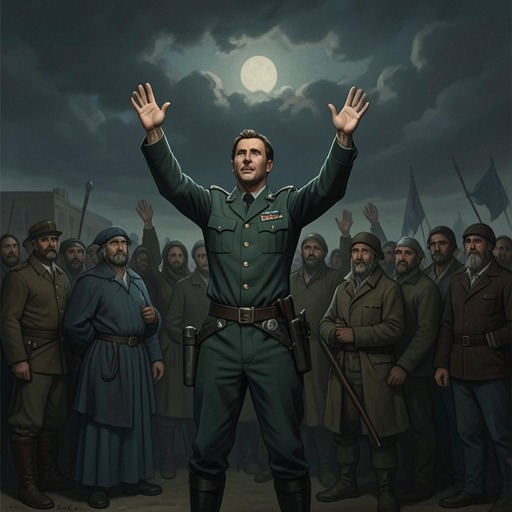
The DispossessedPermanent revolution is the Odonian conception of social change as an unfinished practice, renewed through individual thought and action rather than secured once and for all by institutions. In Shevek’s understanding, a society remains alive only when people can exercise moral choice, initiate change, and contribute their distinct abilities; collective solidarity cannot be made compulsory without turning into rule.
An Odonian Principle
The idea joins individual freedom to social responsibility. Shevek understands his “cellular function” as the work an individual can do best and therefore the person’s strongest contribution to society. A healthy society coordinates such freely exercised functions, gaining adaptability and strength from their differences. Society can offer security and stability, but only individuals possess the power of moral choice and change. Sacrifice may be required; compromise of that capacity to choose cannot be the foundation of genuine solidarity.
This reasoning makes permanent revolution more than a defense of private will. Shevek concludes that his drive to create does not separate him from his fellows: understood through Odonian reciprocity, it binds him to them. The society’s failure to live up to its ideal increases, rather than cancels, his responsibility toward it. Revolution begins in the thinking mind, but its measure is whether individual initiative can renew the common life.
From Principle to Practice
Shevek gives the principle practical form when he resolves to go to Abbenay with Takver and establish a printing syndicate. It will publish the uncut Principles of Simultaneity, Bedap’s scientific education proposal that the PDC would not circulate, and Tirin’s play. He describes this work as fulfilling his function in the social organism and unbuilding walls. The decision turns a dispute over blocked publication into a commitment to create alternative means of circulation and expression.
The choice also confronts the informal force of conformity. Shevek recognizes that he and Takver had let Sabul choose for them; convention, fear of being different, and fear of social ostracism had become an internal authority. His resolve to act is therefore both personal and political: initiative must be exercised against constraints that operate without a formal state, even when those constraints present themselves as communal judgment.
Freedom, Risk, and Collective Judgment
The principle becomes a public controversy in the debate over contact with Urras. The Syndicate of Initiative has built a transmitter, broadcast to Urras, received communications, and published them despite opposition from much of the PDC and the Brotherhood. Rulag argues that this exposes Anarres to danger and threatens the settlement’s prohibition on Urrasti coming ashore. She warns that contact could open a path from a few visitors to exploitation and military occupation. Bedap counters that Anarres should meet Urras as an equal, but the gathering accepts that Urrasti will not be brought to Anarres aboard the Kuieo Fort or the Mindful.
Shevek then distinguishes that collective decision from a separate question: whether an Anarresti may travel to Urras. He argues that the Terms of the Settlement do not forbid such a journey, and that the PDC would assume authority if it prohibited an individual action that harms no one on Anarres. His position does not erase the society’s fear of external coercion; it asks whether that fear can justify restricting harmless individual initiative. Permanent revolution is tested precisely where freedom carries risk and agreement cannot be treated as an unquestionable rule.
At a later meeting, Shevek states the principle in its sharpest social form: if a person cannot work in solidarity with others, that person has both the duty and the right to work alone. A society founded on revolution cannot demand that everyone accept majority rule as a substitute for responsibility. For Shevek, accepting no imposed rule means becoming the initiator of one’s acts and answerable for them; only then can society live, adapt, and survive. His insistence that revolution is an obligation and a hope of evolution makes ongoing change the condition of social continuity, not its opposite.
Historical Memory and Living Practice
Anarres commemorates the uprising that preceded its settlement through Insurrection Day, a midsummer festival in which cooks and refectory workers are honored because a syndicate of cooks and waiters began the strike that led to the insurrection. The anniversary joins political memory to the work and shared celebration of everyday life. Its traditions preserve the origin of collective change, but Shevek’s understanding of permanent revolution refuses to let that memory become a claim that the work of revolution is over.
The principle also changes what the past can teach. As children at Wide Plains learn about prisons through the story of Odo’s imprisonment in Drio, Tirin asks whether many people would beat one person. Years later, Shevek says Tirin taught him what prisons are and who builds them, connecting the image of confinement to the walls people reproduce through social practice. The hymn of the Insurrection, sung by Shevek among the marchers in Nio Esseia, carries the same history into a new struggle: a remembered uprising is not a finished inheritance, but a resource for action in the present. Permanent revolution thus names a continuing obligation to keep freedom and mutuality from becoming fixed forms of authority.